D0 Segmentation: How to Boost Revenue from Day One
February 2, 2026
Here's the harsh truth: In the world of mobile apps, your product needs to show revenue from the very first day to have any chance of survival.
We constantly hear from our users: "Our product is still in early testing, it's too soon to think about segmentation." The reality? It's already too late. Your test results and initial performance directly determine whether you'll secure investment, what your UA budget will be, and ultimately — whether your product becomes a hit or gets shelved. That's the real forecast: how much money your company can actually make from this project.
In this article, we'll break down how apps and games can build their first segments to unlock product potential and generate initial revenue traction.
Why D0 is Make-or-Break for Your Unit Economics
Everyone in the studio needs to understand this — CEOs, producers, and game designers alike: D0 is when you see the behavior of ALL acquired users, which means its impact on unit economics is absolutely massive.
During the first and second game sessions, users make the most critical decision: will they continue playing or using your mobile app? Does it deliver real value? Do they actually like the content or gameplay?
Get D0 right, and you've set the foundation for sustainable growth. Get it wrong, and you're burning money on users who'll never come back.
Media Source Segmentation — The Foundation of Your Strategy
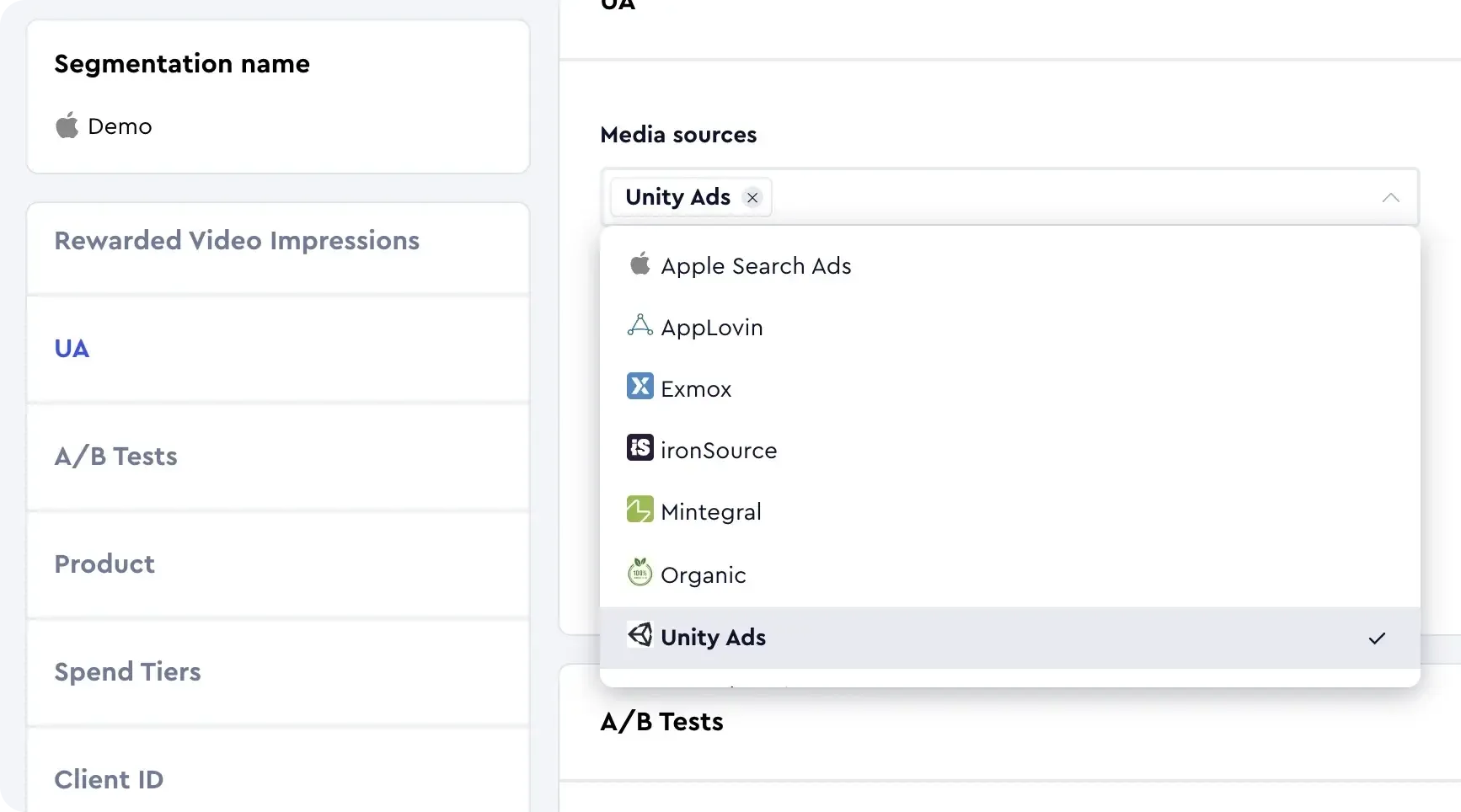
The first and most universal step that helps us better monetize users is segmentation by media source and UA campaign. Magify enables you to configure segments based on which UA campaign brought the user, along with additional metadata about them, and then analyze which monetization strategy works best.
For example, we see that users from AppLovin watch rewarded ads more frequently and willingly purchase in-app items, while users from Facebook are quicker to start trials and less likely to cancel subscriptions. This not only allows us to personalize the user experience but also helps identify which acquisition channel is best suited for specific monetization goals.
Real-world example: If you notice that TikTok users actively engage with rewarded videos but have a low average IAP check, you can automatically show them more ad placements and fewer aggressive purchase offers. Meanwhile, Google Ads users with high LTV can be immediately shown premium offers. This way, you can build the most personalized monetization strategy that your audience will actually be loyal to.
First Session — The Moment of Truth
The first session and initial user contact with your product remain critically important. Segmentation allows you to see how specific user groups react to every design decision in your game. And once you can see reactions at this granular level, you have a tool for surgical precision optimization.
According to our data, 40-60% of users make their engagement decision within the first 3-5 minutes. This is exactly where D0 segmentation becomes mission-critical.
Day-Zero Segmentation for Games
Every game has in-game currency, every game has items, and when it comes to payments and in-game purchases — the fundamentals are identical. Whether we're talking about casual, hardcore, or mid-core games, the payment logic is the same.
1. Payment Segmentation and First Transaction Analysis
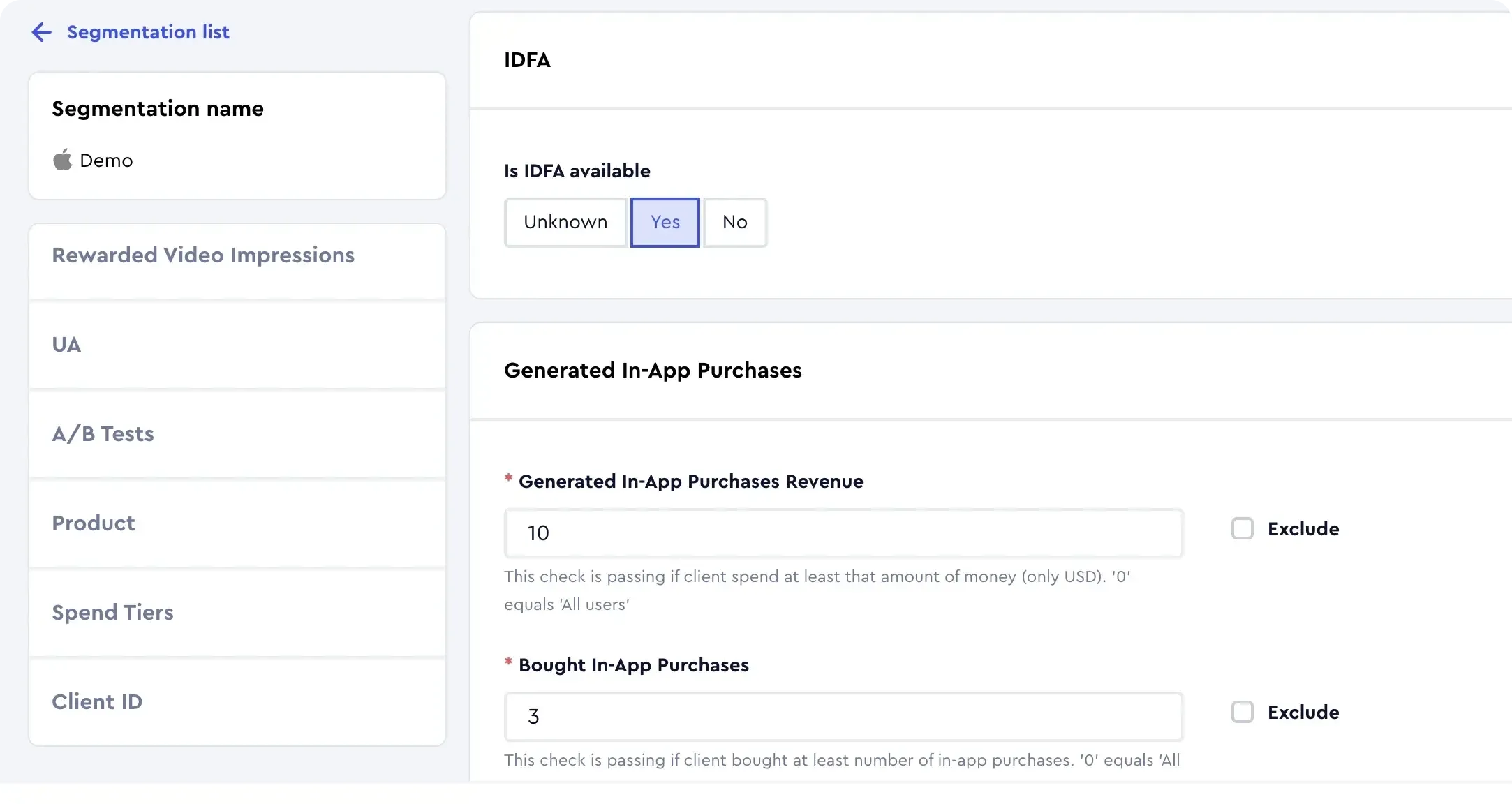
Dividing players into groups based on how they pay — but not just by the amount they spend. We're looking at a broader spectrum of closely interconnected variables. These factors aren't self-sufficient on their own, but when cross-referenced, they answer key questions about your project.
Here's why these factors matter:
First Payment Size — Distributing users by their first payment amount reveals how important the minimum payment is (often considered psychologically significant for players). Knowing the first payment size also tells you how long users who paid a lot upfront stay in the project.
You can then create segments like:
- Micro-spenders ($0.99-$2.99) — show regular small offers, boosters, daily deals
- Mid-spenders ($4.99-$19.99) — focus on value packs and seasonal offers
- Whales ($20+) — VIP status, exclusive content, personalized offers
First Payment Level — At what progression level does the user make their first payment? Players respond differently to different types of stimulation. By placing various stimuli at different progression points, you can segment players by the types of incentives they respond to:
- Early payers (level 1-5) — impulse buyers, respond to starter packs and limited-time offers
- Mid-journey payers (level 6-15) — conscious buyers who need specific value
- Late payers (level 16+) — engaged players ready to pay for progression and exclusivity
Then you personalize the user experience for each group.
2. Behavioral Segmentation in the First Session
Beyond payments, it's critically important to track player behavior in their very first session:
First Session Duration:
- Quick-droppers (< 2 minutes) — didn't complete tutorial, need to simplify onboarding
- Explorers (2-10 minutes) — completed basic path, show them core loop
- Engaged players (10+ minutes) — fell in love with the game, can introduce first soft monetization
Tutorial Completion:
- Players who skipped tutorial — often experienced gamers or those coming from competing games. Can show them harder content earlier
- Players who completed full tutorial — need gradual onboarding
- Players stuck on a specific step — need to simplify that moment or add hints
Interaction with Game Mechanics:
- Went straight to PvP — competitive type, motivate with leaderboards and ranks
- Stayed in PvE — prefers solo progression, give quests and achievements
- Actively customizes character — values aesthetics, monetize through skins
3. Country and Platform Segmentation
Geo-segmentation is critical for D0:
- Tier 1 (US, UK, CA, AU) — high ARPU, aggressive monetization from first session
- Tier 2 (EU, JP, KR) — balance between ads and IAP
- Tier 3 (LATAM, SEA, MENA) — focus on ads monetization, lower IAP prices
Platform also matters:
- iOS users — on average pay 30-40% more, show premium offers
- Android users — more price-sensitive, need budget packs
4. Segmentation for Subscription Apps
For non-gaming apps with subscription models, D0 segmentation is structured differently:
By Trial Type:
- Users who immediately started trial — hot leads, high probability of converting to paying
- Users who postponed trial — need nurturing, show value proposition
- Users who closed paywall — work through free content and soft conversion
By Feature Usage:
- Power users — use 3+ features in first session, show premium benefits
- Single-feature users — focus on one function, gradually reveal others
- Browsers — just looking around, need wow-moment or social proof
By Registration Source:
- Social login (Google, Apple ID) — quick registration, higher retention
- Email login — more conscious choice, often higher LTV
- Anonymous — maximum low friction, but worse retention
Practical D0 Personalization Strategies
For Games:
Segment: Early payer from Tier 1, iOS, completed tutorial
- Show starter pack for $4.99 at level 3
- Give x3 currency for first purchase
- Unlock VIP chat and exclusive skin
Segment: Engaged non-payer, Android, Tier 3, 15+ minutes in session
- Focus on rewarded video every 5 minutes
- Give ability to earn premium currency through ads
- Show low-entry IAP ($0.99) only after day 3
For Apps:
Segment: iOS, Tier 1, used 3+ features, social login
- Show paywall with annual subscription at 50% discount at end of first session
- Emphasize savings and premium features
- Give 7-day trial instead of 3-day
Segment: Android, Tier 2, 1 feature, email login
- Give 3 days full access without paywall
- Show in-app tutorials for other features
- On day 4 — soft paywall with monthly subscription
Technical Implementation Aspects
Minimum event set for D0 segmentation:
app_open— with parameters: source, campaign, platform, countrytutorial_start/tutorial_completelevel_completeor similar progression eventfirst_purchase— with parameters: amount, level, time_from_installad_impression/ad_rewarded— for ads monetizationfeature_used— which functions user engaged with
Critical metrics for segment analysis:
- ARPU D0 — average revenue per user on day one
- Conversion rate D0 — % who made a purchase
- Session length — average session duration
- Tutorial completion rate
- D1 retention by segments — how segmentation impacts retention
The Golden Rule of D0 Segmentation
Don't overload users on day one. Even if you've created perfect segments, aggressive monetization can kill retention. The balance looks like this:
- Games: first paywall at level 3-5, first ad after 10 minutes of gameplay
- Apps: first paywall after demonstrating core value (usually 2-3 screens)
Remember: The goal of D0 isn't to squeeze maximum money — it's to find the magic balance between revenue and retention with Magify. A user who paid $1 on D0 and left on D1 is worse than a user who paid $0 on D0 but will bring $10 over a month.
Conclusion
D0 segmentation isn't about complex algorithms and endless A/B tests. It's about understanding who your user is, where they came from, and what they need right now. Start with basic segmentation by source and first actions, collect data, analyze it — and you'll already see patterns that will help boost your D0 revenue by 20-30%.
And most importantly — don't wait for the "perfect moment." If you already have a steady flow of installs, even a small one, you already have data for your first segments. Start now, iterate fast, and results won't keep you waiting.
What to read next
Magify: One Platform That Replaces Three — BI, Product Analytics, and LiveOps

“Our portfolio includes several dozen studios earning over €1m in monthly revenue”: Magify’s Evgeniy Kurenkov on scaling smarter live ops